Focus groups remain a cornerstone of qualitative research. Bringing together six to ten participants for an open conversation allows businesses to explore motivations, preferences and pain points in a way surveys cannot. Group dynamics spark new ideas and reveal shared experiences, while moderators can probe unexpected tangents. This combination of rich dialogue and flexibility makes focus groups especially valuable for market research.
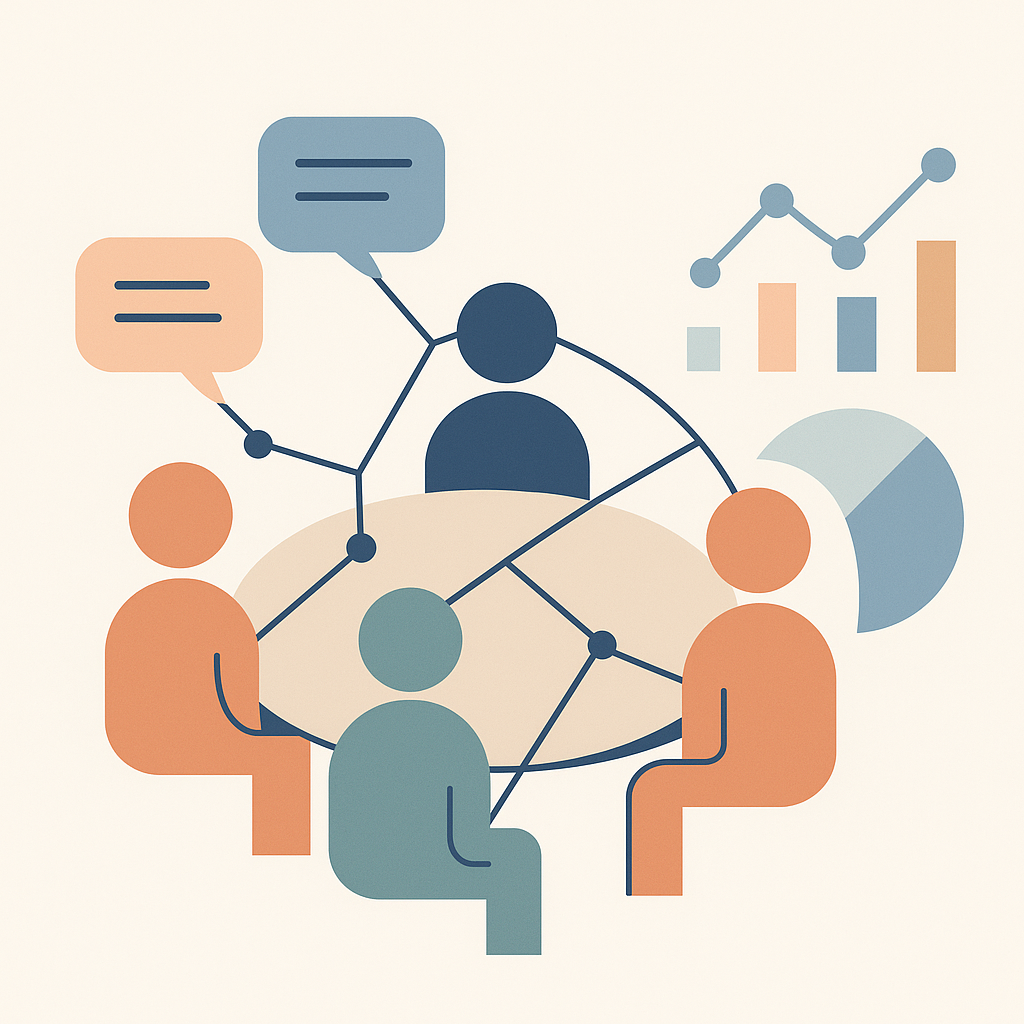
Why Focus Groups Matter
Focus groups deliver several benefits:
- Rich, qualitative data: they capture contextual information that quantitative methods often miss.
- Group dynamics: participant interactions can generate ideas and uncover shared experiences.
- Flexibility: moderators can adapt questions in real time.
- Immediate feedback: participants can react to prototypes or concepts on the spot.
- Cost‑effectiveness: compared with large surveys, focus groups provide depth at a manageable cost.
The Hidden Crisis: When Focus Groups Become Unmanageable
While focus groups start as manageable research sessions, they quickly spiral into an analytical nightmare as the number of sessions grows. What begins as a simple conversation with 8 participants becomes a monumental task when you're running 10, 20, or 50+ focus groups across different demographics, locations, or time periods.
Each additional focus group doesn't just add 90 minutes of recording time, it multiplies the analytical complexity exponentially. Suddenly, you're not just analyzing individual conversations; you're trying to compare opinions across hundreds of participants, identify patterns that span multiple sessions, and reconcile conflicting viewpoints that emerge from different groups.
The Manual Analysis Trap
Traditional focus group analysis follows a painfully slow, manual process that becomes unsustainable at scale:
- Transcription bottleneck: Each hour of focus group audio takes 4-6 hours to transcribe manually. With 20 focus groups, that's 80-120 hours of transcription work before analysis even begins.
- Manual coding chaos: Researchers must manually read through hundreds of pages of transcripts, highlighting themes, coding responses, and trying to remember what was said in which group.
- Cross-group comparison nightmare: Comparing opinions across different demographics becomes nearly impossible when you're juggling multiple spreadsheets, sticky notes, and fading memories of each session.
- Opinion tracking paralysis: When participants express conflicting views across different groups, manually tracking these divergences requires cross-referencing dozens of documents and hoping you don't miss crucial insights.
- Stakeholder frustration: Decision-makers wait weeks or months for insights that should be available in days, leading to missed opportunities and delayed product launches.
The Scale Problem: Why Traditional Methods Fail
As your research scales from 2-3 focus groups to dozens, traditional analysis methods completely break down. You can't manually compare the opinions of 200+ participants across 25 different sessions. You can't manually identify that the "ease of use" theme appears in 80% of your groups but with dramatically different emotional undertones. You can't manually track how opinions evolve between your first and last sessions.
The result? Researchers either limit their scope (missing valuable insights) or drown in data (delivering late, incomplete analysis). Both scenarios lead to poor decision-making and wasted research budgets.
Modern Solutions: AI-Powered Analysis at Scale
The solution isn't to abandon focus groups, it's to transform how we analyze them. Modern AI-powered platforms can handle the scale that manual methods cannot, processing dozens of focus groups simultaneously while maintaining the nuanced understanding that makes qualitative research valuable.
These tools don't just transcribe faster; they create intelligent connections across sessions, automatically identify themes that span multiple groups, and highlight opinion differences that manual analysis would miss. They turn weeks of manual work into hours of automated insight generation.
Getting Started with AI‑Enhanced Focus Groups
To make the most of focus groups in today's research landscape:
- Set clear objectives: define the questions you need answered and the decisions your team will make.
- Recruit a diverse group: ensure participants represent the target audience.
- Use discussion guides and templates: they keep sessions consistent and make comparisons easier.
- Embrace AI tools: automated transcription and analysis free up time and reveal patterns quickly.
- Interpret insights collaboratively: involve stakeholders early to align on findings and next steps.
SemanticMap: The Solution to Focus Group Analysis at Scale
SemanticMap was built specifically to solve the scale problem that traditional focus group analysis methods cannot handle. Our platform doesn't just make analysis faster, it makes analysis possible at the scale modern research demands.
When you're running 20+ focus groups with hundreds of participants, SemanticMap automatically transcribes every session, identifies speakers across all groups, and creates a unified analysis that reveals patterns invisible to manual methods. You can finally compare opinions across demographics, track theme evolution over time, and identify consensus vs. disagreement without drowning in spreadsheets.
Why Focus Group Researchers Choose SemanticMap
Speaker Identification
Automatically separate and identify different participants in your focus groups. No more manual sorting through "Speaker 1, Speaker 2" confusion, SemanticMap tracks who said what throughout the session.
Conversation Pattern Highlights
Identify interaction patterns and participation balance across your sessions to understand where alignment or differences emerge.
Structured Guides
Run consistent sessions with clear discussion guides and compare results across multiple groups using consistent frameworks.
Multi-Interview Analysis
Analyze multiple focus groups simultaneously to identify broader patterns and insights across different sessions and participant groups. Compare opinions across demographics and track theme evolution over time.
See SemanticMap in Action
Unlock Your Focus Group Insights
Join researchers who've already streamlined their focus group analysis with SemanticMap.